What does "learning the Quran" actually mean?
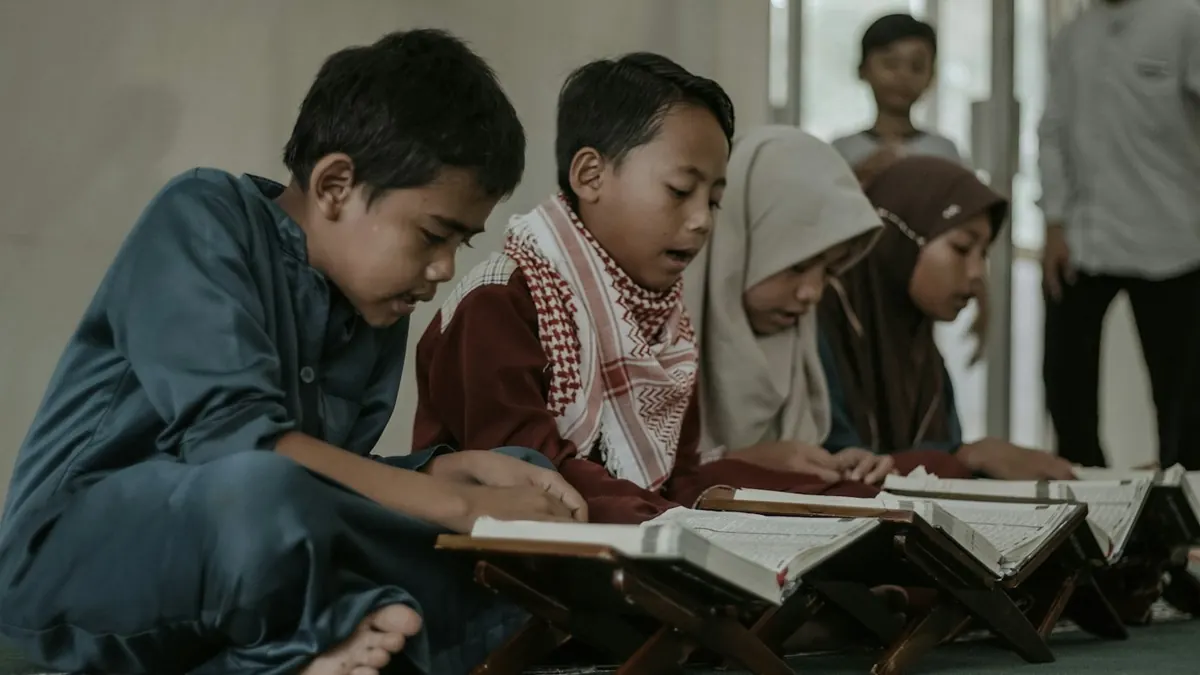
When people say they want to learn the Quran, they usually mean one of four things, and it helps to know which one you're after:
- Reading it: being able to open the Mushaf and read the Arabic text yourself.
- Reciting it correctly: pronouncing every letter properly, with Tajweed.
- Memorizing it: a few surahs for Salah, or the whole Quran (Hifz).
- Understanding it: knowing what the words mean and how they apply to life.
A good online Quran course builds these in the right order. You can't recite well before you can read, and memorizing is far easier once your Tajweed is solid. Skipping steps is the most common reason children get stuck.
The learning path, step by step
Here's the route most of our students follow. Your child doesn't have to do every stage, and many families stop at fluent reading with Tajweed. The free trial class tells us where your child should start.
| Stage | Who it's for | What they learn | Usual length |
|---|---|---|---|
| 1. Noorani Qaida | Complete beginners, usually ages 4 to 7 | Arabic letters, sounds, vowels and joining letters | Depends on the child |
| 2. Nazra (Quran reading) | Children who know their letters | Reading the Quran from the Mushaf, slowly at first, then fluently | 1 Year |
| 3. Tajweed | Children who can already read | Reciting correctly: makharij, noon sakinah, madd, qalqalah and stopping rules | 8 Months |
| 4. Hifz | Fluent readers ready to memorize | Memorizing the Quran with daily revision so it stays strong | 3-5 Years |
| 5. Translation & Tafseer | Older children and adults who want to understand | The meaning of what they recite, with Quranic Arabic alongside (see our Arabic course) | 2 Years |
The lengths above are typical, not promises. A six-year-old with two classes a week will move differently from a twelve-year-old with five. What matters is steady progress, and you'll see that in the regular progress reports.
How long does it take to learn the Quran online?
Honest answer: it depends on three things more than anything else.
- How often your child has class. Short, frequent lessons beat one long lesson a week.
- A little practice at home. Even ten minutes on the days between classes makes a real difference.
- Age. Very young children learn the sounds beautifully but need more time; older children often move faster through reading.
As a rough picture, many children go from not knowing the alphabet to reading the Quran on their own within about a year. Hifz is a much longer commitment, usually measured in years. Your tutor will give you a realistic plan after the first lesson, not a sales pitch.
Why learn the Quran online instead of at a local class?
Local madrassah classes have a lot going for them, and many of us grew up in them. But for busy families today, online lessons solve problems that are hard to fix any other way:
- One-on-one attention. In a group of fifteen, a child might read aloud for a couple of minutes. Online, they read for nearly the whole lesson.
- No travel. No driving across town in winter, no waiting in the car park.
- Times that fit around school. Our tutors teach across time zones, so families in the UK, USA, Canada, Australia and the Middle East can pick after-school, evening or weekend slots.
- You can watch. Parents are welcome to sit in on any class, so you always know what's being taught and how.
How to choose the right online Quran course
There are a lot of academies out there, and from the outside they all look similar. Whoever you choose, we'd suggest checking these six things before you pay anything:
- Is there a free trial? You should see a real lesson before committing.
- Are classes one-on-one? Group calls are cheaper but children get far less speaking time.
- Is Tajweed taught from the start? Fixing bad habits later is much harder than learning correctly the first time.
- Is there a clear plan? Ask what your child will learn this month, and what comes after.
- Will you get progress updates? You shouldn't have to guess how things are going.
- Can you watch the lessons? For young children especially, this should be a yes.
We built our courses around exactly this list, and we're happy to be judged on it.
What does an online Quran course cost?
Our Quran courses cost $30 to $50 a month, depending on the course, and every course starts with a free trial class. Some programmes are free for families who need support, so please ask if cost is a worry. All current fees are listed on our courses page.
Learning the Quran as an adult
If you're a parent reading this and thinking "I never properly learned either", you're not alone, and it's not too late. Adults follow the same path, in private one-on-one lessons at times that fit around work. Many find they move faster than they expected. Have a look at our Quran classes for adults, or book a trial for yourself alongside your child.
Helping your child at home
The tutor does the teaching, but home is where the habit grows. A few things that work well for the families we teach:
- Keep the same class time each week so it becomes part of the routine, like school.
- Set up a quiet corner with headphones and the Qaida or Mushaf ready before class.
- Ask your child to read to you once or twice a week, and make a fuss of their progress.
- Recite short surahs together in Salah, so what they learn gets used every day.
- Tell the tutor if something isn't working. The pace can always be adjusted.
Ready to start?
If your child is a complete beginner, start with Noorani Qaida online. If they already read, have a look at our Tajweed classes or online Hifz course. Not sure? Book a free trial and the tutor will work it out with you. Finding the right level is exactly what that first lesson is for.